
Introduction
Bridges are one of the most important parts of modern construction. They connect roads, cities, villages, railway lines, rivers, valleys, and industrial areas. Without bridges, transportation becomes slow, costly, and difficult.
In civil engineering, different bridge designs are used for different locations and load requirements. Some bridges are built for pedestrians, some for vehicles, some for trains, and some for heavy industrial transport.
This guide explains 20 types of bridges in simple words so beginners, students, construction workers, and safety professionals can easily understand them.
What Is a Bridge?
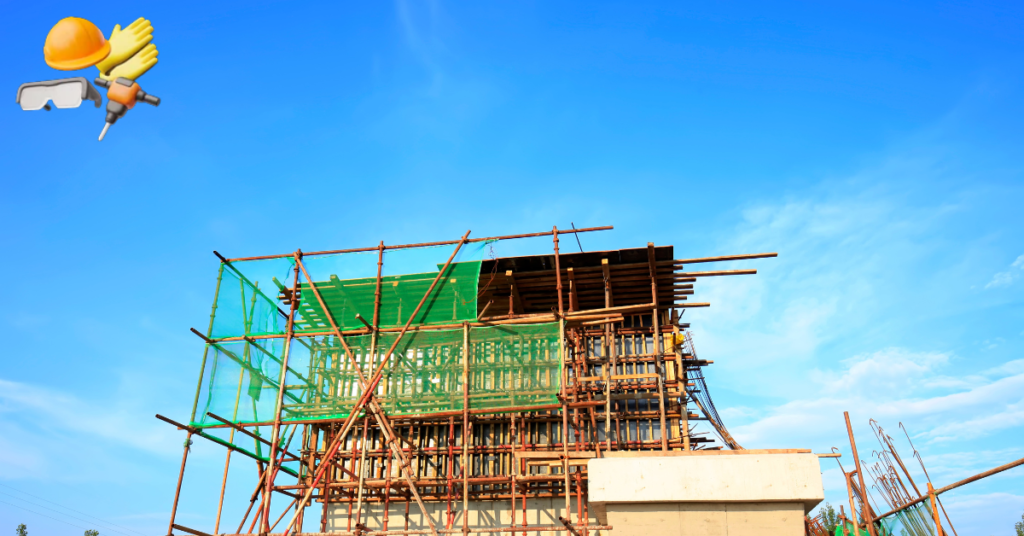
A bridge is a structure built to pass over an obstacle such as a river, road, railway track, valley, canal, or drain. It helps people, vehicles, trains, or pipelines move safely from one side to another.
A bridge must be strong enough to carry weight, resist weather, handle traffic movement, and remain safe for many years.
Why Bridge Design Is Important
Bridge design is important because every location has different needs. A small village bridge cannot use the same design as a large highway bridge. Engineers check soil condition, water flow, traffic load, span length, material strength, and safety standards before selecting a bridge type.
Good bridge design improves safety, reduces maintenance cost, and increases the life of the structure.
1. Beam Bridge
A beam bridge is one of the simplest and most common bridge types. It has horizontal beams supported by columns or piers at both ends.
Beam bridges are commonly used for short distances, small roads, walkways, and local crossings.
Common use: Small roads, rural areas, footpaths, and short highway crossings.
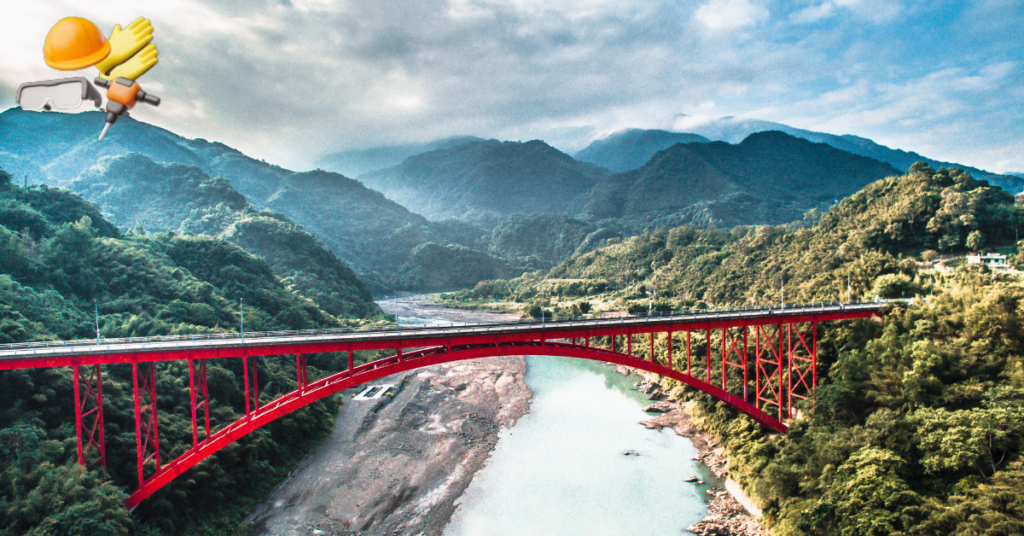
2. Arch Bridge
An arch bridge uses a curved arch shape to transfer weight to the supports on both sides. This type of bridge is strong and attractive.
Arch bridges are often made from stone, concrete, or steel. They are suitable for rivers and valleys.
Common use: Rivers, historic areas, city roads, and scenic locations.
3. Suspension Bridge
A suspension bridge is supported by large cables hanging between tall towers. The bridge deck is suspended from these cables.
This type is used for very long spans where normal supports are difficult to build.
Common use: Long river crossings, sea crossings, and large city bridges.
4. Cable-Stayed Bridge
A cable-stayed bridge has towers with cables directly connected to the bridge deck. It looks modern and is very strong.
It is commonly used for medium to long spans and requires less cable than a suspension bridge.
Common use: Highways, city bridges, and large river crossings.
5. Truss Bridge
A truss bridge uses a triangular framework to distribute weight. The triangle design gives extra strength and stability.
Truss bridges are often made from steel and are commonly used for railways and heavy traffic.
Common use: Railway lines, industrial areas, and old highway bridges.
6. Cantilever Bridge
A cantilever bridge is built using structures that project outward from supports. The two sides may meet in the middle or support a central span.
This bridge is useful where temporary support from below is difficult.
Common use: Deep rivers, valleys, and railway crossings.
7. Tied-Arch Bridge
A tied-arch bridge combines an arch with a horizontal deck tie. The arch supports the deck while the tie helps control outward force.
It is also called a bowstring arch bridge because of its shape.
Common use: Road bridges, city bridges, and decorative bridge projects.
8. Floating Bridge
A floating bridge rests on floating platforms or pontoons instead of fixed piers. It is used where the water is deep and building foundations is difficult.
Floating bridges are usually used in special locations.
Common use: Lakes, military crossings, temporary routes, and deep water areas.
9. Movable Bridge
A movable bridge can open or move to allow boats and ships to pass. It may lift, swing, or rotate depending on the design.
These bridges are important in areas with both road traffic and water traffic.
Common use: Ports, canals, rivers, and shipping routes.
10. Bascule Bridge
A bascule bridge is a type of movable bridge that opens upward like a gate. It uses counterweights to lift the bridge deck.
This bridge is common in cities with waterways.
Common use: Canal roads, harbor areas, and urban water crossings.
11. Swing Bridge
A swing bridge rotates horizontally around a central point to allow boats to pass.
It is useful where vertical lifting is not suitable.
Common use: Rivers, canals, and railway crossings near waterways.
12. Lift Bridge
A lift bridge moves its deck vertically upward between towers. Ships pass underneath when the deck is lifted.
It is different from a bascule bridge because the whole deck rises straight up.
Common use: Ports, ship channels, and industrial water routes.
13. Pedestrian Bridge
A pedestrian bridge is designed only for people walking across roads, railway tracks, rivers, or busy areas.
It improves safety by keeping pedestrians away from vehicle traffic.
Common use: Schools, markets, highways, railway stations, and urban roads.
14. Railway Bridge
A railway bridge is built to carry trains. It must handle heavy loads, vibration, and continuous movement.
Railway bridges are usually made from steel or reinforced concrete.
Common use: Railway tracks over rivers, roads, and valleys.
15. Road Bridge
A road bridge is built for cars, buses, trucks, motorcycles, and other vehicles. It is one of the most common bridge types.
Road bridges must be designed according to traffic load and safety standards.
Common use: Highways, city roads, flyovers, and rural roads.
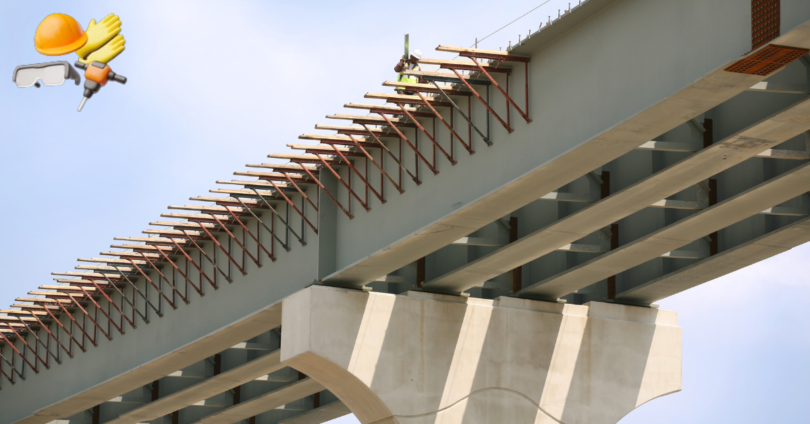
16. Box Girder Bridge
A box girder bridge uses hollow box-shaped girders to support the deck. This design is strong and stable.
It is commonly used in modern highways and metro projects.
Common use: Flyovers, highways, metro lines, and long-span roads.
17. Slab Bridge
A slab bridge is made from a flat reinforced concrete slab. It is simple, economical, and suitable for short spans.
It is commonly used in small roads and drainage crossings.
Common use: Small canals, drains, village roads, and short crossings.
18. Composite Bridge
A composite bridge uses more than one material, usually steel and concrete. The materials work together to provide strength and durability.
Composite bridges are popular in modern construction.
Common use: Highways, urban roads, and industrial projects.
19. Temporary Bridge
A temporary bridge is built for short-term use. It may be used during construction, emergencies, floods, or repair work.
These bridges are usually quick to install and remove.
Common use: Construction sites, disaster areas, military routes, and repair projects.
20. Foot Over Bridge
A foot over bridge is a pedestrian bridge built over roads or railway tracks. It helps people cross safely without stopping traffic.
In busy cities, foot over bridges are very important for public safety.
Common use: Highways, railway stations, schools, markets, and bus stops.
Bridge Materials Used in Construction
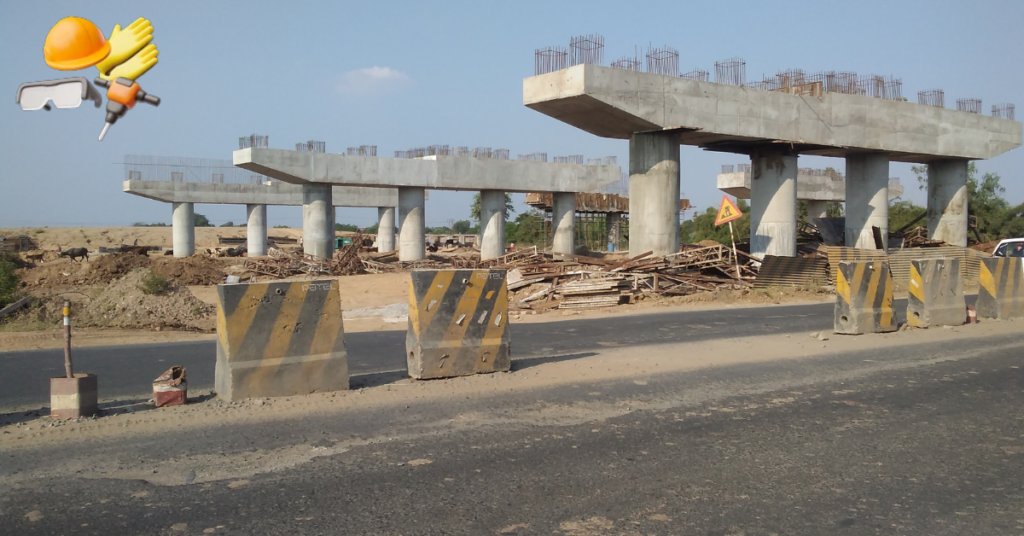
Different bridge types use different materials depending on the project. Common bridge materials include:
Concrete, steel, reinforced concrete, stone, timber, cables, and composite materials.
Concrete is strong and durable. Steel is flexible and suitable for long spans. Stone is mostly used in traditional or historic bridges. Timber is used for small or temporary bridges.
Safety Importance in Bridge Construction
Bridge construction is high-risk work. Workers deal with heavy materials, height, machinery, water, traffic, and electrical tools. Proper safety planning is very important.
Workers should use PPE such as helmets, safety shoes, gloves, reflective jackets, harnesses, goggles, and life jackets when working near water.
Traffic control signs, barricades, warning lights, and trained supervisors are also important for bridge construction safety.
Best PPE for Bridge Construction Workers
Bridge construction workers should use proper safety equipment every day. Important PPE includes:
Safety helmet, safety shoes, safety harness, gloves, high-visibility jacket, eye protection, ear protection, dust mask, and fall protection equipment.
Using the right PPE reduces injury risk and improves workplace safety.
Difference Between Small and Large Bridges
Small bridges are usually used for short road crossings, drains, and village roads. They are easier to build and require less material.
Large bridges are used for highways, railways, rivers, and sea crossings. They need advanced engineering, strong foundations, heavy machinery, and strict safety checks.
Which Bridge Type Is Strongest?
There is no single strongest bridge for every situation. The strongest bridge depends on span length, load, material, design, and site condition.
For long spans, suspension bridges and cable-stayed bridges are very strong. For heavy railway loads, truss bridges and girder bridges are commonly used. For short spans, beam and slab bridges are practical and strong enough.
FAQs
The main types of bridges include beam bridges, arch bridges, suspension bridges, cable-stayed bridges, truss bridges, cantilever bridges, slab bridges, and girder bridges.
Which bridge is best for long distance?
Suspension bridges and cable-stayed bridges are commonly used for long-distance crossings because they can cover large spans.
Which bridge is best for short roads?
Beam bridges and slab bridges are best for short roads, small drains, and local crossings.
What is the simplest type of bridge?
A beam bridge is the simplest type of bridge. It uses a horizontal beam supported at both ends.
What is a pedestrian bridge?
A pedestrian bridge is a bridge made for people to walk safely over roads, rivers, or railway tracks.
Why is safety important in bridge construction?
Safety is important because bridge construction involves height, heavy machinery, traffic, water, and large materials. PPE and safety planning help prevent accidents.
Conclusion
Bridges are essential structures in construction, transportation, and public safety. Different projects need different bridge designs depending on distance, load, location, and purpose. From simple beam bridges to advanced suspension bridges, every bridge type has its own use and importance.
Understanding 20 types of bridges helps students, engineers, construction workers, and safety professionals choose the right design for the right situation. It also helps people understand why bridge safety, material selection, and proper construction planning are so important.
For construction projects, safety should always come first. Workers must use proper PPE, follow site rules, and work under trained supervision. A well-designed and safely built bridge can serve people for many years.