
A civil construction surveyor plays a crucial role on a construction site. Before a building, road, bridge, factory, warehouse, drainage line, or industrial project takes shape, surveyors help define the exact measurements, levels, boundaries, and layout points that guide the entire project.
In simple words, a civil construction surveyor makes sure that construction work happens in the right place, at the right level, and according to the approved drawing.
For beginners, this role may look like only measuring land or using a machine on a tripod. But in reality, surveying is directly connected with construction quality, safety, project cost, and site planning. A small survey mistake can affect foundation levels, column positions, road slopes, drainage flow, and even worker safety.
That is why modern construction sites in India need skilled surveyors who understand drawings, instruments, site conditions, safety equipment, and personal protective equipment. Whether the project is a small residential building or a large industrial site, accurate surveying helps reduce errors and keeps the work organized.
What Is a Civil Construction Surveyor?
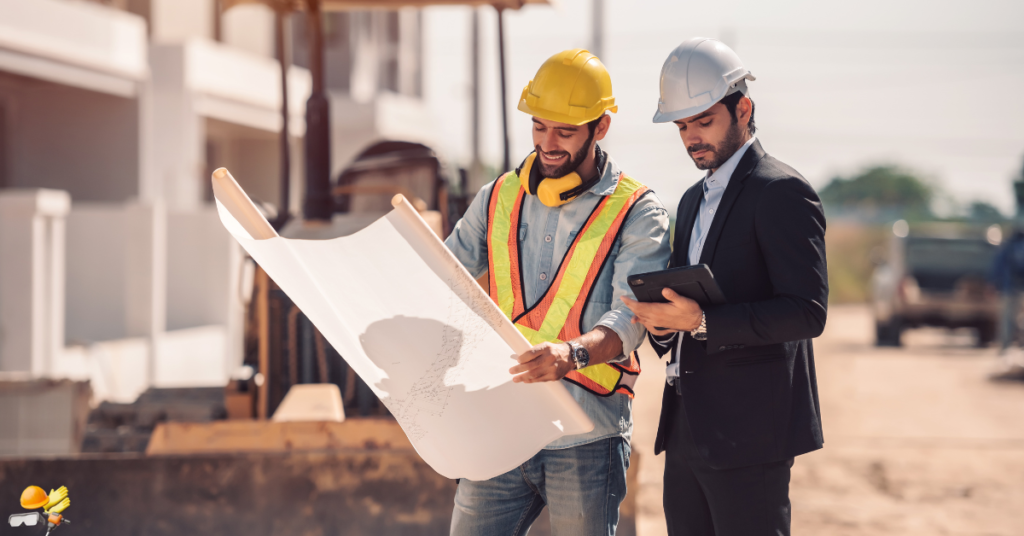
A civil construction surveyor is a trained professional who measures land, checks site levels, marks construction points, and verifies that construction work follows approved plans and specifications.
The surveyor works closely with civil engineers, site supervisors, architects, contractors, safety officers, and project managers. Their job is not limited to taking measurements. They also help convert design drawings into real physical points on the construction site.
For example, if a drawing shows where columns should be placed, the surveyor marks those column positions on the ground. If a road needs a certain slope for water drainage, the surveyor checks and guides the required levels. If a factory floor needs proper alignment, the surveyor verifies that the layout is correct.
In construction, even a few centimeters can make a big difference. A wrong level may create water logging. A wrong alignment may affect walls, beams, road edges, or machinery installation. This is why a civil construction surveyor is important from the starting stage to the final handover stage of a project.
Why Civil Construction Surveying Matters in Construction Safety
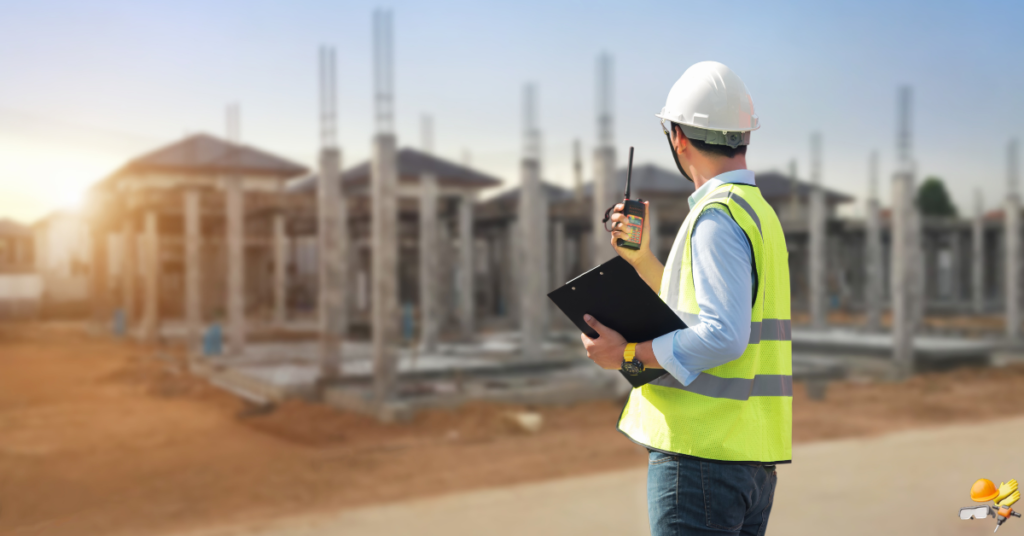
Surveying is often seen as a technical job, but it is also connected with construction safety. Proper marking, levels, and alignment help prevent unsafe site conditions.
For example, wrong excavation marking can increase the risk of soil collapse. Incorrect road slope can create drainage problems and slippery surfaces. Poor layout marking may cause machines and workers to operate in unsafe zones. Wrong foundation levels can affect structural stability.
A good surveyor helps the team avoid these issues before they become costly or dangerous.
Construction safety is not only about wearing a safety helmet, safety shoes, or safety gloves. These are very important, but safety also depends on planning, measurement, access routes, barricading, excavation control, and proper site layout.
In India, where many construction sites have tight working spaces, heavy machinery, mixed workforce skills, and fast deadlines, accurate surveying becomes even more important. A surveyor who understands workplace safety can help the project team reduce confusion and maintain safer movement for workers, vehicles, and materials.
For safe and accurate site work, a civil construction surveyor should also understand the right use of Construction PPE, Personal Protective Equipment, Safety Helmets, Safety Shoes, Safety Gloves, Fall Protection Equipment, Road Safety Equipment, Fire Safety Equipment, Electrical PPE, and Industrial Safety Equipment. These safety categories help workers stay protected during layout marking, level checking, road surveying, excavation work, industrial projects, and height-related construction activities.
Main Responsibilities of a Civil Construction Surveyor
The responsibilities of a civil construction surveyor can vary depending on the project type. However, most surveyors handle several common tasks on construction sites.
Site Measurement and Land Survey
Before construction starts, the surveyor measures the land and checks the existing site condition. This may include boundary points, ground levels, nearby roads, drainage lines, existing structures, and access routes.
These measurements help engineers understand the actual condition of the site. They also help compare the site with approved drawings and legal documents.
In residential projects, this may include plot boundaries and building layout. In road projects, it may include chainage, levels, curves, and road width. In industrial safety projects, it may include factory floor levels, equipment zones, and service routes.
Setting Out Building Layout
Setting out means transferring the construction drawing onto the ground. This is one of the most important tasks of a civil construction surveyor.
The surveyor marks the position of columns, walls, foundations, centerlines, road edges, drains, manholes, and other important construction elements.
If setting out is wrong, the whole structure may be affected. That is why surveyors must work carefully, double-check points, and coordinate with the site engineer before work begins.
Checking Levels and Alignment
Surveyors check the vertical and horizontal accuracy of construction work. This includes foundation depth, plinth level, slab level, road level, drainage slope, retaining wall alignment, and structural grid lines.
For example, in road construction, proper slope allows rainwater to move away from the road surface. In building construction, correct slab levels help avoid finishing problems. In industrial construction, proper levels help machine installation and workplace safety.
Preparing Survey Reports
A surveyor often prepares reports, level sheets, layout records, and measurement data. These records help engineers, contractors, and clients track progress and verify completed work.
Good documentation also helps avoid disputes. If any issue appears later, survey records can show what was measured, marked, checked, and approved.
Supporting Quality Control
Surveying supports quality control by confirming that construction matches the drawing. Before concrete pouring, road laying, steel installation, or finishing work, survey checks help identify mistakes early.
Correcting mistakes before execution is easier and cheaper than breaking completed work later. This saves time, money, and material.
Types of Surveying Used in Civil Construction
A civil construction surveyor may use different surveying methods depending on the project requirement.
Land Survey
Land surveying is used to measure land boundaries, area, levels, and site features. It is common before starting residential, commercial, industrial, and infrastructure projects.
For land development in India, surveyors may also coordinate with local site documents, revenue maps, municipal approvals, or project drawings.
Topographic Survey
A topographic survey records the natural and man-made features of the land. This includes slopes, trees, roads, drains, buildings, poles, ground levels, and other visible features.
Topographic data helps engineers design roads, drainage systems, building platforms, and construction plans.
Construction Layout Survey
This survey is used during active construction. The surveyor marks the exact position of structural and civil work according to approved drawings.
It includes column marking, foundation marking, wall lines, road alignment, utility lines, and equipment foundations.
Level Survey
Level surveying is used to check height differences between different points. It helps in foundation work, road construction, drainage slope, floor levels, and landscaping.
A level survey is especially important in areas where water flow, rainwater drainage, and surface slope matter.
Road Survey
Road surveying includes alignment, chainage, curves, levels, cross-sections, and road width. It is used in highways, internal roads, industrial roads, and access roads.
Road safety equipment and proper traffic control are also important during road survey work, especially when surveyors work near moving vehicles.
As-Built Survey
An as-built survey records the final position and level of completed construction. It confirms what has actually been built on-site.
This is useful for handover, maintenance, future expansion, safety planning, and legal documentation.
Tools and Instruments Used by Civil Construction Surveyors
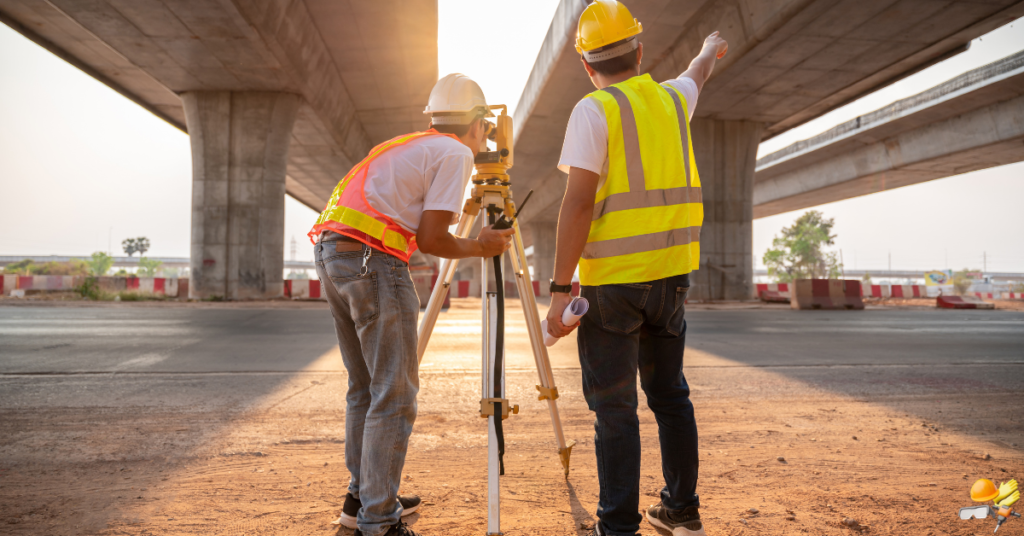
Surveyors use different instruments based on accuracy needs, site size, and project type.
Measuring Tape
A measuring tape is still useful for small checks, short distances, and quick site verification. However, it should not be used alone for high-accuracy layout work.
Auto Level
An auto level is used to check height and level differences. It is commonly used in building, road, drainage, and foundation work.
For example, surveyors use auto levels to check excavation depth, plinth level, road slope, and slab height.
Total Station
A total station is a modern surveying instrument used for accurate distance, angle, coordinate, and layout work. It is widely used in civil construction projects.
It helps surveyors mark points faster and more accurately compared to traditional methods.
GPS and DGPS Equipment
GPS and DGPS systems are used for larger sites, road projects, land development, and infrastructure work. They help capture coordinates and mapping data.
For highly accurate work, surveyors may use advanced systems depending on the project requirement.
Laser Level
Laser levels are commonly used for interior work, floor leveling, ceiling alignment, and finishing tasks. They help maintain uniform levels across a space.
Survey Tripod, Staff, Prism, and Accessories
Survey equipment also includes tripods, leveling staff, prisms, batteries, chargers, marking paint, pegs, nails, and field books.
A good surveyor also keeps backup accessories because equipment failure can delay site work.
Safety Equipment Required for a Civil Construction Surveyor
A surveyor spends a lot of time on active construction sites. This means they are exposed to moving vehicles, excavation areas, falling objects, dust, heat, noise, slippery ground, electrical hazards, and height-related risks.
That is why proper safety equipment and PPE are essential.
Safety Helmet
A safety helmet protects the head from falling objects, accidental impact, and overhead site hazards. Every surveyor should wear a helmet on construction sites.
In building construction, workers may be doing shuttering, steel fixing, concreting, and lifting work above ground level. A helmet is basic but very important head protection.
Safety Shoes
Safety shoes protect feet from sharp objects, falling tools, nails, stones, wet surfaces, and uneven ground. Surveyors often walk across rough areas, excavation edges, reinforcement zones, and material storage areas.
Good safety shoes with anti-slip soles and toe protection are useful for everyday site movement.
Safety Gloves
Safety gloves protect hands while handling pegs, rods, tapes, marking tools, survey accessories, and rough materials. Gloves also help when working in hot, dusty, or sharp conditions.
For electrical zones, suitable electrical PPE may be needed depending on the site risk.
Reflective Safety Jacket
A reflective jacket improves visibility. It is especially important for road projects, highway surveys, industrial sites, warehouses, and areas where vehicles or machines are moving.
Surveyors often stand in open areas while using instruments. High visibility clothing helps machine operators and drivers notice them from a distance.
Eye Protection
Safety goggles or protective glasses help protect eyes from dust, flying particles, concrete debris, and sunlight glare.
Eye protection is useful during excavation, cutting work, road work, and industrial construction.
Fall Protection Equipment
If a surveyor works near edges, elevated slabs, bridges, scaffolding, or high-risk height areas, fall protection equipment may be required.
This can include safety harnesses, lifelines, anchor points, and related fall protection systems. The correct equipment should be selected according to the site safety plan.
Dust Mask or Respiratory Protection
Construction sites may have dust from excavation, cement, cutting, grinding, and road work. A dust mask or suitable respiratory protection helps reduce exposure.
In industrial safety environments, respiratory PPE should match the hazard type.
Fire Safety Equipment Awareness
A surveyor may not be directly responsible for firefighting, but they should know where fire extinguishers, emergency exits, and fire safety equipment are located on-site.
This is especially important in industrial sites, welding areas, electrical rooms, fuel storage zones, and temporary site offices.
Civil Construction Surveyor and Workplace Safety
A civil construction surveyor can support workplace safety in many practical ways.
First, surveyors help define safe working zones. Correct marking helps workers understand where excavation, foundation, roadwork, or structural work will happen.
Second, surveyors help prevent layout confusion. Confusion on a busy site can create safety risks, especially when multiple teams are working together.
Third, surveyors support better traffic movement. On road and industrial sites, proper marking of road edges, access routes, and turning points helps reduce accidents.
Fourth, surveyors identify uneven ground, wrong slopes, and unsafe levels. These issues can create slip, trip, and fall hazards.
Finally, surveyors help improve coordination. When measurement data is clear, engineers and supervisors can plan work more safely.
Skills Required to Become a Civil Construction Surveyor
To become a good civil construction surveyor, a person needs both technical and practical skills.
Drawing Reading Skills
Surveyors must understand construction drawings, layout plans, structural drawings, road drawings, and level details.
They should know how to read dimensions, grid lines, coordinates, benchmark levels, sections, and reference points.
Instrument Handling
A surveyor must know how to set up and use instruments such as auto level, total station, GPS, and laser level.
Incorrect instrument setup can create wrong readings, so proper handling is very important.
Basic Mathematics
Surveying involves distance, angles, levels, coordinates, slope, area, and measurement calculations. Basic mathematics helps surveyors work accurately.
Site Awareness
Good surveyors understand how construction sites work. They know where workers, machines, materials, and hazards are located.
This awareness helps them take measurements safely and avoid disturbing active work.
Communication Skills
A surveyor must communicate clearly with engineers, supervisors, workers, machine operators, and safety teams.
For example, if a layout point is not clear, the surveyor should explain it properly before work begins.
Attention to Detail
Surveying requires focus. A small mistake can affect the project. Surveyors must check readings, confirm references, and avoid assumptions.
Safety Awareness
Surveyors should understand PPE, construction safety, industrial safety, road safety, electrical hazards, and fall protection requirements.
Good technical skill without safety awareness is not enough on modern sites.
Civil Construction Surveyor Career Scope in India
Construction is a major industry in India. Roads, highways, metro projects, bridges, warehouses, factories, residential buildings, commercial towers, and smart city projects all require survey work.
This creates career opportunities for civil construction surveyors in different sectors.
A surveyor can work with construction companies, infrastructure contractors, real estate developers, industrial contractors, road contractors, government projects, and consultancy firms.
Freshers may start as junior surveyors, assistant surveyors, or site survey trainees. With experience, they can become senior surveyors, survey engineers, quantity support staff, site coordinators, or project planning assistants.
Many surveyors also learn AutoCAD, Civil 3D, GIS, drone mapping, and advanced total station work to improve their career growth.
In India, practical site experience is highly valuable. A person who understands both surveying and safety can become more useful for employers because construction companies want workers who can deliver accurate work without creating site risks.
How a Civil Construction Surveyor Works on a Typical Site
A normal day for a civil construction surveyor may start with checking drawings, coordinates, benchmark data, and instructions from the site engineer.
After that, the surveyor prepares the required instruments and safety gear. Before entering the site, they wear PPE such as a safety helmet, safety shoes, reflective jacket, and gloves.
Then the surveyor identifies the reference point or benchmark. This is important because all measurements should connect to a trusted reference.
Next, they set up the instrument carefully. For an auto level, the instrument must be properly leveled. For a total station, the setup point and backsight must be correct.
After setup, the surveyor marks points, checks levels, records readings, and communicates results to the site team.
If any difference is found between the drawing and the site condition, the surveyor informs the engineer before work continues.
At the end of the task, the surveyor may prepare a report, update records, and store equipment safely.
Safety Risks Surveyors Commonly Face on Construction Sites
Surveyors often move across different parts of the site, so they face several safety risks.
Moving Machinery
Excavators, cranes, dumpers, trucks, rollers, and concrete mixers can create serious hazards. Surveyors should avoid blind spots and maintain a safe distance.
A reflective jacket and proper communication with machine operators are important.
Excavation Hazards
Excavation areas can have unstable soil, open trenches, loose edges, and water accumulation. Surveyors should not stand too close to unsafe edges.
Barricading and proper access should be checked before survey work near trenches.
Falling Objects
Overhead work can create falling object risks. This is why a safety helmet is necessary.
Surveyors should avoid standing under suspended loads or active lifting zones.
Uneven Ground
Construction sites often have stones, debris, reinforcement bars, pits, and wet areas. Safety shoes help reduce injury risk, but careful walking is also important.
Electrical Hazards
Temporary electrical cables, panels, generators, and power tools can create risk. Surveyors should avoid touching unknown cables or placing equipment near unsafe electrical areas.
Electrical PPE may be needed in specific work zones.
Road Traffic
In road surveying, surveyors may work near live traffic. This requires road safety equipment such as warning cones, reflective jackets, barricades, safety signage, and trained flagmen.
PPE Checklist for Civil Construction Surveyors
Before starting site work, a surveyor should check the required PPE.
A basic PPE checklist may include:
Safety helmet for head protection.
Safety shoes for foot protection.
Reflective jacket for visibility.
Safety gloves for hand protection.
Safety goggles for eye protection.
Dust mask where dust exposure is high.
Ear protection in noisy industrial zones.
Fall protection equipment for height-related work.
Raincoat or weather protection during monsoon work.
The exact PPE requirement depends on the site risk assessment. For example, a surveyor working on a road project may need more road safety equipment, while a surveyor working in a factory may need industrial safety equipment and specific personal protective equipment.
Buying Tips for Surveyor Safety Equipment in India
When buying safety equipment for surveyors in India, quality should be the first priority. Cheap and poor-quality PPE may look acceptable, but it can fail during real site conditions.
Choose Certified Safety Gear
Select safety equipment that follows relevant safety standards. For helmets, shoes, gloves, harnesses, and other PPE, check product quality, material strength, comfort, and durability.
Match PPE With Site Conditions
A building surveyor, road surveyor, and industrial surveyor may not need exactly the same PPE.
For example, road surveyors need high-visibility clothing and traffic control equipment. Industrial surveyors may need specialized gloves, eye protection, and fire safety awareness. Height work requires fall protection equipment.
Focus on Comfort
Surveyors may wear PPE for long hours. If safety shoes are uncomfortable or helmets are poorly fitted, workers may avoid wearing them properly.
Comfort improves compliance and safety.
Check Durability
Construction sites are rough. PPE should handle dust, heat, moisture, impact, and daily use.
Good-quality safety gear lasts longer and protects better.
Buy From Reliable Suppliers
For construction PPE, electrical PPE, fire safety equipment, road safety equipment, and industrial safety equipment, choose suppliers who understand site requirements.
Reliable suppliers can help select the right safety helmets, safety shoes, safety gloves, fall protection equipment, and other personal protective equipment.
Common Mistakes Civil Construction Surveyors Should Avoid
Even experienced surveyors can make mistakes if they rush or ignore basic checks.
Not Checking the Benchmark
A benchmark is the reference for levels. If the benchmark is wrong, all levels may become wrong.
Surveyors should confirm the benchmark before starting work.
Poor Instrument Setup
If the instrument is not properly leveled, centered, or calibrated, measurements can be inaccurate.
Surveyors should set up instruments carefully and check them regularly.
Ignoring Drawing Revisions
Construction drawings may be revised during the project. Working from an old drawing can create serious mistakes.
Surveyors should always confirm the latest approved drawing before marking work.
Weak Communication
If survey points are marked but not explained properly, workers may misunderstand them.
Clear marking and communication reduce rework.
Not Wearing PPE
Some surveyors remove helmets, gloves, or reflective jackets because the task looks quick. This is unsafe.
Accidents can happen within seconds. PPE should be worn consistently.
Working Too Close to Hazards
Surveyors should not stand near moving machinery, open edges, trenches, or lifting areas without proper safety control.
Poor Record Keeping
Without proper records, it becomes difficult to prove what was checked or marked.
Good survey notes help protect the project team from confusion and disputes.
Practical Tips for Beginners in Civil Construction Surveying
If you are new to surveying, start by learning the basics properly.
Understand how to read site drawings. Learn grid lines, dimensions, levels, coordinates, and sections. Practice using measuring tape, auto level, and total station under supervision.
Spend time observing experienced surveyors. Notice how they set up instruments, confirm benchmarks, mark points, and communicate with site teams.
Always keep a field notebook. Write readings, dates, locations, drawing references, and instructions clearly.
Do not guess. If something is unclear, ask the site engineer or senior surveyor.
Take safety seriously from day one. Wear your safety helmet, safety shoes, safety gloves, and reflective jacket before entering the work area.
Also, respect workers on-site. Surveyors depend on teamwork. Clear and polite communication helps work move faster.
Civil Construction Surveyor in Building Projects
In building projects, surveyors are involved from excavation to finishing stages.
They mark building boundaries, column grids, foundation points, wall lines, plinth levels, slab levels, staircase positions, lift shafts, and external development areas.
For example, before foundation excavation, the surveyor marks the exact excavation points. Before column casting, they verify column location. Before slab casting, they check levels and alignment.
In high-rise buildings, surveying becomes even more important because vertical alignment affects the entire structure.
Safety is also critical. Building sites often have height work, falling object risk, steel bars, concrete work, electrical cables, and uneven surfaces. Proper construction PPE is essential.
Civil Construction Surveyor in Road Projects
Road projects require accurate alignment, levels, slope, and width control.
Surveyors mark centerlines, road edges, curves, culverts, drains, shoulders, and chainage points. They also check formation levels, subgrade levels, base course levels, and final road surface levels.
In India, road surveyors may work near traffic, villages, highways, industrial roads, and busy urban roads. This makes road safety equipment very important.
Reflective jackets, warning cones, barricades, signboards, and flagmen help protect surveyors and road users.
A road surveyor must also understand drainage. Poor road levels can create water logging, potholes, and unsafe driving conditions.
Civil Construction Surveyor in Industrial Projects
Industrial construction includes factories, warehouses, plants, refineries, workshops, and production units.
Surveyors in industrial projects work on foundations, machine bases, steel structures, pipe racks, roads, drains, tanks, and utility areas.
Accuracy is very important because machines and industrial systems often require exact alignment.
Industrial sites may have additional hazards such as heavy lifting, welding, electrical systems, chemicals, confined spaces, and fire risks.
Surveyors should use suitable industrial safety equipment and follow the site safety permit system where required.
Civil Construction Surveyor and Fire Safety
Fire safety is an important part of construction and industrial sites. While surveyors do not usually install fire systems, their work can support fire safety planning.
For example, correct layout marking helps maintain access roads for fire vehicles. Proper site levels help drainage around storage areas. Accurate marking supports the installation of fire water lines, hydrants, pump rooms, and emergency access routes.
Surveyors working near welding, fuel storage, electrical rooms, or industrial areas should know the location of fire extinguishers and emergency exits.
Fire safety equipment should be visible, accessible, and not blocked by survey instruments, materials, or temporary site work.
Civil Construction Surveyor and Fall Protection
Fall hazards are common in construction. Surveyors may need to work near slab edges, bridges, retaining walls, scaffolding, trenches, or elevated structures.
Before working in such areas, the surveyor should check if guardrails, barricades, lifelines, or anchor points are available.
Fall protection equipment should be used when required by the site safety plan. This may include a safety harness, lanyard, lifeline, and proper anchorage.
A surveyor should never take shortcuts near height hazards. Even a small measurement task can become dangerous if proper fall protection is ignored.
How Surveying Helps Reduce Construction Rework
Rework means doing the same work again because it was done incorrectly the first time. It wastes time, money, material, and labour.
Surveying helps reduce rework by checking layout, levels, and alignment before construction continues.
For example, if a column is marked in the wrong place and concrete is poured, correction becomes expensive. But if the surveyor catches the error before work starts, the issue can be fixed quickly.
This is why contractors, engineers, and clients value accurate survey work.
Good surveying also improves safety because rework often creates extra cutting, breaking, lifting, and correction activities that increase site risks.
How to Select the Right PPE for Survey Teams
Selecting PPE for survey teams should be based on the type of project and the site hazards.
For general building construction, safety helmets, safety shoes, reflective jackets, gloves, and eye protection may be basic requirements.
For road surveying, add high-visibility clothing, warning cones, barricades, safety signage, and traffic control support.
For industrial surveying, include suitable gloves, eye protection, respiratory protection, ear protection, fire safety awareness, and site-specific personal protective equipment.
For height-related survey work, fall protection equipment is necessary.
The best approach is to conduct a site risk assessment before assigning PPE. This helps avoid both under-protection and unnecessary equipment.
Qualities of a Good Civil Construction Surveyor
A good surveyor is accurate, calm, observant, and responsible.
They do not rush important checks. They understand that their markings guide the work of many people.
They also respect safety rules. They do not enter unsafe areas just to finish a task quickly.
A good surveyor communicates clearly. They inform the site engineer when drawings, site conditions, or levels do not match.
They also maintain their instruments properly. A damaged or poorly calibrated instrument can cause repeated errors.
Most importantly, a good civil construction surveyor understands that measurement accuracy and worker safety must go together.
Future of Civil Construction Surveying
Surveying is becoming more advanced with digital tools, drones, GPS systems, 3D scanning, BIM, and mapping software.
However, basic site surveying skills are still very important. Instruments can help, but the surveyor must understand what the data means.
In India, construction companies are slowly adopting modern tools for road projects, industrial projects, metro work, smart cities, and large real estate developments.
Surveyors who learn both traditional and modern methods will have better opportunities.
At the same time, safety standards are also improving. More companies now expect surveyors to follow PPE rules and site safety systems properly.
This means future surveyors should improve both technical knowledge and safety awareness.
FAQs About Civil Construction Surveyor
What does a civil construction surveyor do?
A civil construction surveyor measures land, marks construction points, checks levels, verifies alignment, and helps ensure that construction work follows approved drawings. They work on buildings, roads, bridges, industrial projects, drainage systems, and other civil works.
Why is a civil construction surveyor important on a construction site?
A surveyor is important because accurate marking and levels help prevent construction mistakes. Their work improves quality, reduces rework, supports site planning, and helps maintain safer working conditions.
What safety equipment does a civil construction surveyor need?
A surveyor usually needs a safety helmet, safety shoes, reflective jacket, safety gloves, eye protection, and a dust mask where required. For road work, road safety equipment is important. For height work, fall protection equipment may be required.
Is surveying connected with construction safety?
Yes, surveying is connected with construction safety. Correct layout, levels, access routes, excavation marking, and road alignment help reduce unsafe conditions and confusion on-site.
What skills are required to become a civil construction surveyor?
A surveyor needs drawing reading skills, instrument handling, basic mathematics, site awareness, communication skills, attention to detail, and safety knowledge. Experience with auto level, total station, GPS, and layout work is also useful.
Can beginners become civil construction surveyors in India?
Yes, beginners can start as assistant surveyors or junior surveyors. They should learn drawing reading, measurement basics, equipment handling, and site safety rules. Practical experience is very important for growth.
Which instruments are used by civil construction surveyors?
Common instruments include measuring tape, auto level, total station, GPS, DGPS, laser level, tripod, leveling staff, prism, and marking tools. The choice depends on the project type and required accuracy.
How does surveying reduce construction rework?
Surveying reduces rework by checking layout, levels, and alignment before construction work is completed. Early correction prevents costly mistakes such as wrong column positions, incorrect road slope, or poor foundation levels.
Conclusion
A civil construction surveyor is much more than a person who measures land. This role connects design drawings with real construction work on-site. From building layout and road alignment to industrial foundations and drainage levels, surveyors help projects move in the right direction.
For beginners and intermediate readers in India, understanding this role is useful whether you want to start a surveying career, manage a construction site, or buy the right safety equipment for survey teams. Accurate surveying improves quality, reduces rework, saves cost, and supports safer working conditions.
Safety should always remain part of surveying work. Surveyors regularly move around active construction zones, road projects, industrial sites, excavation areas, and height-risk locations. That is why PPE such as safety helmets, safety shoes, safety gloves, reflective jackets, eye protection, and fall protection equipment must be used properly.
As construction projects become more advanced, surveyors who understand both technology and workplace safety will have stronger career opportunities. The best surveyors are accurate, careful, practical, and safety-focused. Their work helps protect structures, workers, equipment, and project timelines.